Refinancing your mortgage can be a powerful financial move to lower your interest rate, change your loan term, or tap into your home’s equity. However, timing is everything in the world of real estate. Many homeowners find themselves watching market trends and wondering exactly how fast can you refinance a home loan to capitalize on a sudden drop in rates.
Understanding the typical timeline and the “seasoning” requirements of different loan products is essential. Whether you are looking at

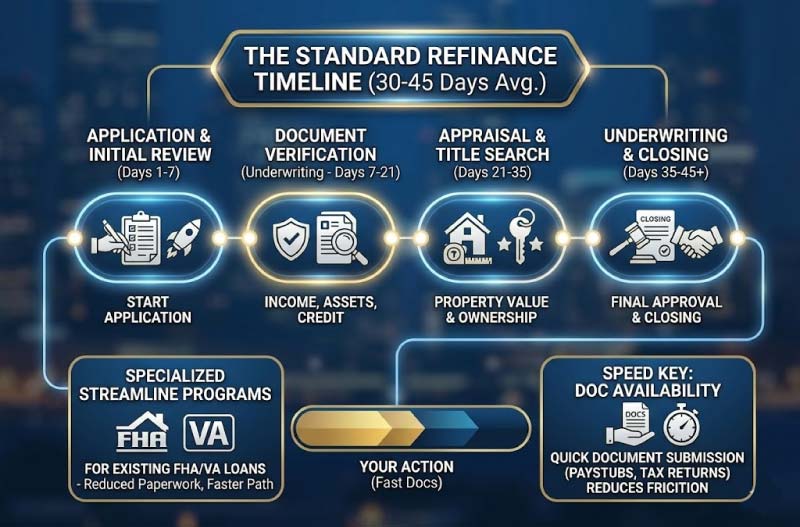
The Standard Refinance Timeline
On average, a mortgage refinance takes between 30 and 45 days from application to closing. While some lenders can move faster, this window allows for the necessary appraisal, title search, and underwriting steps. If you currently hold
The speed of the process often rests on how quickly you can provide documentation. Underwriters need to verify your income, assets, and credit history. Any delay in submitting pay stubs or tax returns can add days to the overall schedule. Staying organized is the best way to ensure your file moves through the system without friction.
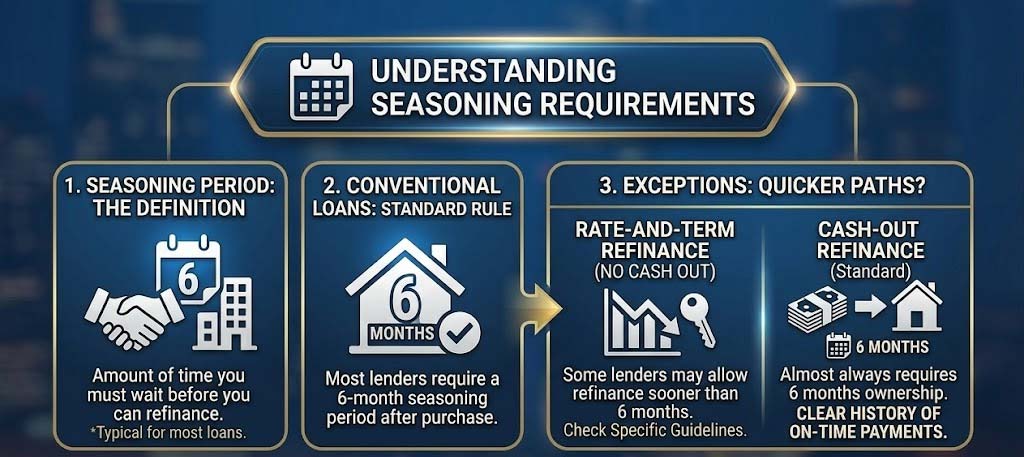
Understanding Seasoning Requirements
A common question for new homeowners is how fast can you refinance a home loan after originally purchasing the property. Most lenders require a “seasoning period,” which is the amount of time you must wait before you can refinance. For most
However, if you are performing a “rate-and-term” refinance—where you aren’t taking cash out—some lenders may allow you to refinance even sooner. It is important to check the specific guidelines of your loan type. Cash-out refinances almost always require at least six months of ownership to establish a clear history of on-time payments.
Factors That Influence Refinance Speed
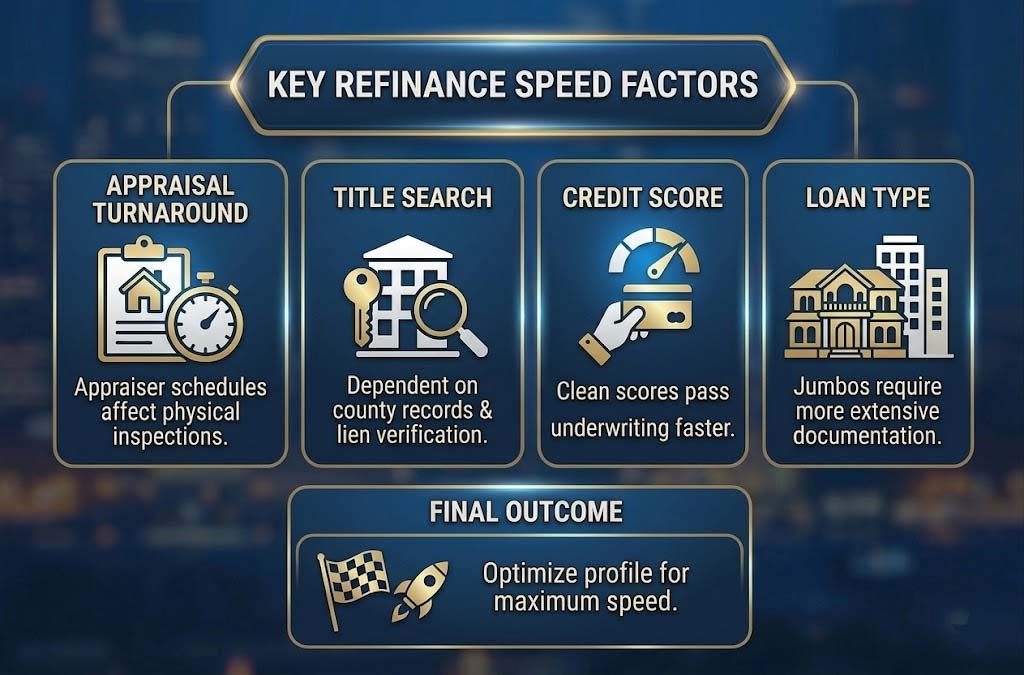
Several external factors can speed up or slow down your closing date:
-
Appraisal Turnaround: If a physical inspection of your home is required, you are at the mercy of the appraiser’s schedule.
-
Title Search: Ensuring there are no liens on your property can take time, depending on your local county records office.
-
Credit Score: A clean credit profile moves through automated underwriting systems much faster than a file requiring manual review.
-
Loan Type: High-balance
Jumbo Loans
How to Speed Up Your Refinance
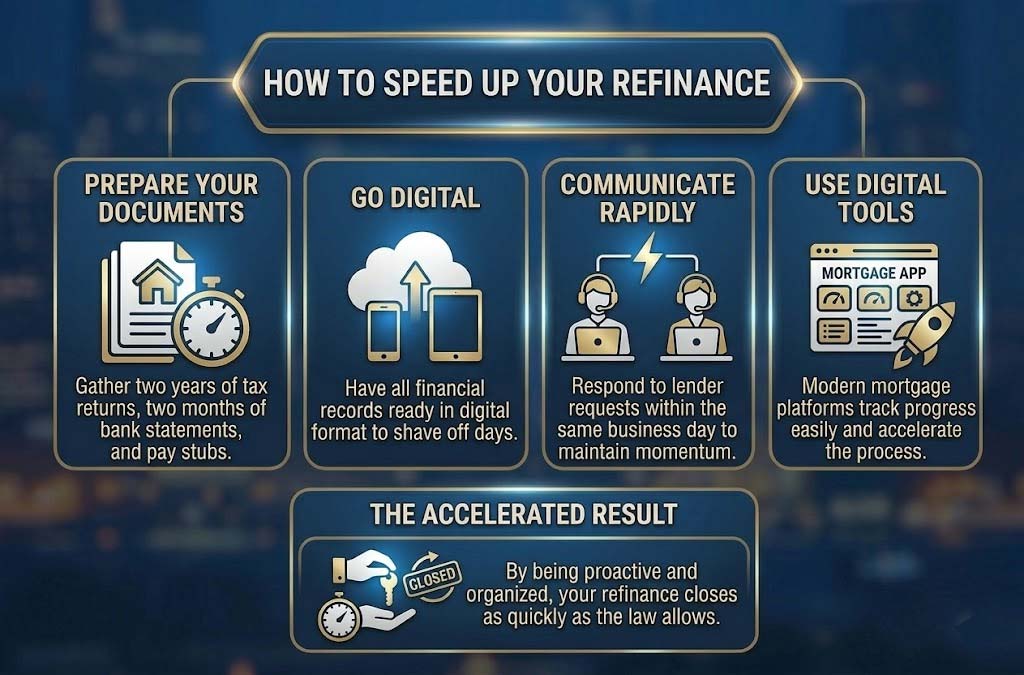
If you want to close as fast as possible, start by gathering your financial documents before you even apply. You will generally need two years of tax returns, two months of bank statements, and your most recent pay stubs. Having these ready digitally can shave a week off the front end of the process.
Communication is also vital. Respond to lender requests within the same business day to keep the momentum going. Modern digital mortgage platforms have made it easier than ever to track your progress. By being proactive, you can ensure that the question of how fast can you refinance a home loan is answered with “as quickly as the law allows.”
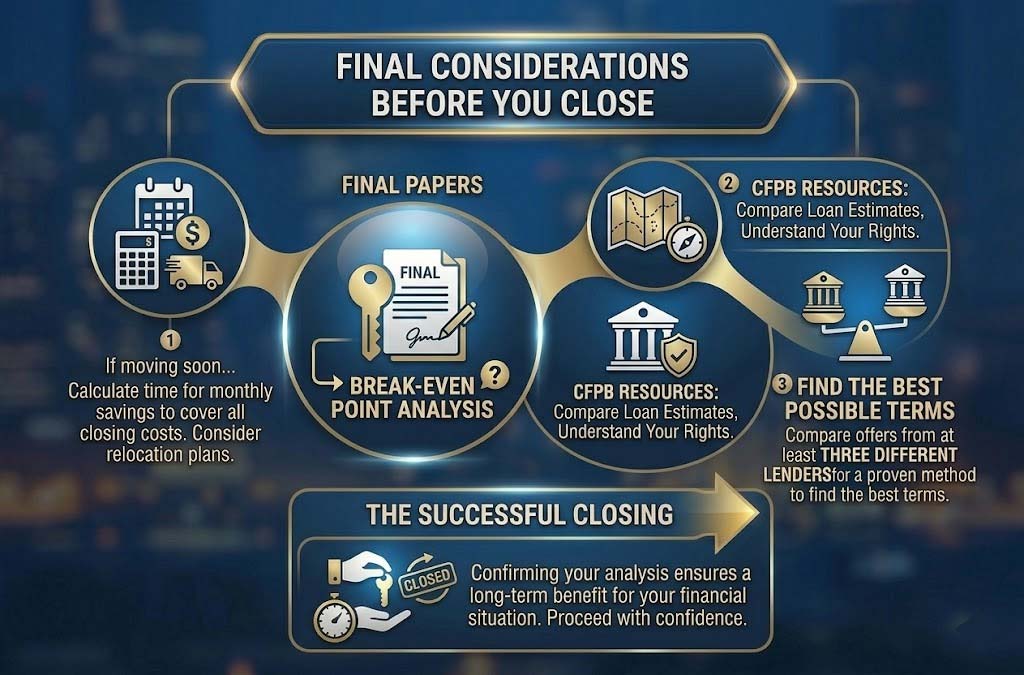
Final Considerations Before You Close
Before signing the final papers, always calculate your “break-even” point. This is the amount of time it takes for your monthly savings to cover the closing costs of the new loan. If you plan to move within a year or two, a refinance might not save you money in the long run.
It is also wise to monitor broader economic trends. The
Partner with Direct Capital Lending
At Direct Capital Lending, we have been helping California homeowners navigate the mortgage market since 2006. Our team understands that every borrower has unique goals, whether you are seeking a quick rate drop or a complex cash-out refinance.
With access to over 50 different lenders, we pride ourselves on providing the transparency and honesty you deserve. We are committed to finding the most competitive rates and efficient timelines for your financial success.
Frequently Asked Questions (FAQs)
Is there a limit to how many times I can refinance?
Technically, there is no legal limit to how many times you can refinance. However, you must consider the closing costs each time. If the new interest rate isn’t significantly lower, the cost of the refinance may outweigh the benefits.
Can I refinance if I have low equity?
Yes, it is possible, though it may be more difficult. Some government-backed programs allow for refinancing with little to no equity. For conventional loans, having less than 20% equity usually requires you to pay Private Mortgage Insurance (PMI).
Do I have to use the same lender for my refinance?
No, you are encouraged to shop around. Your current lender may offer a “retention” deal to keep your business, but other lenders may have more aggressive rates or lower fees. Always compare Loan Estimates from multiple sources.
Will refinancing hurt my credit score?
A refinance involves a “hard inquiry” on your credit report, which may cause a temporary, small dip in your score. However, if you consistently make on-time payments on the new loan, your score will likely recover quickly.
Can I refinance a mortgage that is currently in forbearance?
Generally, you must bring the loan current and make several consecutive on-time payments after the forbearance period ends before you are eligible for a refinance. Requirements vary by loan type, so check with a mortgage professional.